Daily Weather with Surf, Wind and Tropical Storm Forecasts

Daily Baja Weather Forecast
Wednesday 23 September 2026 6:15 AM PDT
Current Weather Conditions
A dynamic atmospheric tug-of-war will shape conditions across the peninsula today. Strong solar heating will bake the interior desert basins, while a compressed, shallow blanket of low clouds clears quickly along the Northern Baja Pacific coast.
Along our northern beaches, cool ocean water and morning low clouds will keep the early hours brisk. Because the marine layer is compressed, strong sunshine will push that gray deck offshore by mid-morning, treating coastal communities to a pleasantly warm and bright afternoon before refreshing ocean breezes arrive later in the day.
Across on the Gulf of California side, exceptionally warm seawater that feels more like bathwater will continue pumping heavy humidity right onto the eastern shoreline. That moisture battery will keep coastal towns feeling intensely muggy, sticky, and sweltering through the afternoon, with very little relief after the sun sets tonight. Meanwhile, tropical moisture spreading northward from the deep Pacific will begin filtering into the southern tip of the peninsula, bringing building clouds and muggy air to southern slopes.
Regional Forecast for Today
Baja California
Morning low clouds and coastal fog along the Northern Baja Pacific—including Tijuana and Rosarito Beach—will burn off rapidly by mid-morning, yielding mostly sunny to sunny skies and mild to pleasantly warm beach conditions with light westerly ocean breezes. Farther south through Ensenada, the San Quintín valley, and El Rosario, sunshine will establish early, making the afternoon feel noticeably warmer to quite warm across coastal flats before moderate afternoon breezes pick up from the northwest.
Taking a short drive inland, the atmosphere heats up in a hurry. Inland valleys around Tecate and Cataviña will feel very hot under blazing sun, while Mexicali endures scorching, bone-dry desert heat all afternoon with light desert breezes. Up in the high country of Laguna Hanson and the Sierra de San Pedro Mártir, expect crisp air, bright blue skies, and comfortably mild afternoon weather before turning quite chilly under clear skies tonight.
Down along the upper Gulf of California, communities from San Felipe down to Puertecitos and Bahía San Luis Gonzaga will see unrelenting sun and blistering heat. Gentle breezes pushing off the warm water will keep conditions feeling extra sticky and uncomfortable straight through the evening.
Baja California Sur
The southern state will remain locked in a thick, tropical moisture pattern throughout the day. Out along the Mid Baja Pacific and Southern Baja Pacific, towns including Guerrero Negro, Bahía Asunción, Punta Abreojos, and San Juanico will see plenty of sunshine, feeling a lot hotter as strong sun beats down and elevated offshore ocean temperatures provide minimal cooling relief.
Along the central Gulf of California coast, Santa Rosalía, Mulegé, and Loreto will feel sweltering, muggy, and heavy under mostly sunny to partly cloudy skies, where rich humidity will make the shoreline air feel like an outdoor steam room.
Across the southern interior and down through the Cape Region, Ciudad Constitución will bake under mostly sunny skies, feeling intensely hot across the valley. Down in La Paz, Los Barriles, Todos Santos, and Cabo San Lucas, thick tropical moisture will keep conditions feeling deeply muggy, sweaty, and very hot under partly cloudy skies. As intense daytime heating interacts with incoming tropical moisture, clouds will stack up over the mountain ridges this afternoon, creating the risk of an isolated thunderstorm, gusty erratic winds, or a passing tropical downpour.
National Hurricane Center (NHC) Tropical Update
Eastern Pacific Tropical Outlook
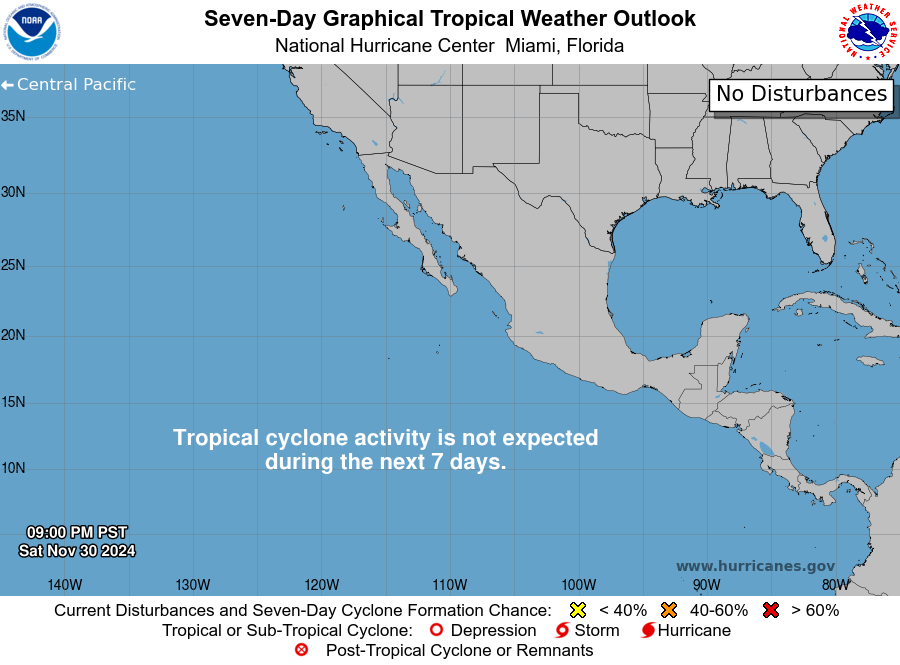
The National Hurricane Center is tracking an active, multi-system tropical pattern across the eastern Pacific. To the south-southeast, Major Hurricane Polo is drifting slowly north as a dangerous, high-end Category 4 hurricane with maximum sustained winds of 150 mph. Polo is completing an eyewall replacement cycle today and is forecast to make a sharp northwestward turn, followed by a west-northwest track parallel to the southwestern coast of mainland Mexico through Friday. Polo remains a powerful, compact system producing peak seas near 46 feet near its center.
Well to the west-southwest, Category 1 Hurricane Odalys is moving east-northeast with maximum sustained winds of 75 mph. Odalys will peak over the next 24 to 36 hours before encountering Polo’s upper-level outflow, cooler ocean waters, and dry air, which will cause it to steadily weaken into a remnant low over open water by early next week. Meanwhile, forecasters are monitoring a broad low-pressure area expected to form south of the Gulf of Tehuantepec over the next 48 hours, which carries an eighty percent chance of tropical development over the next seven days as it tracks west-northwestward.
While Major Hurricane Polo is expected to stay offshore to our south through Friday, long-period southerly ocean swells will begin arriving across southern peninsular waters by Thursday night. As these swells combine with arriving swells from Odalys late this week, expect building, confused seas, heavy surf breaks, and dangerous rip currents along exposed southern and western Pacific shores. Swimmers and mariners should stay alert to changing coastal waters.
7-Day Forecast
High pressure will remain the dominant steering barrier across our northern waters over the next couple of days, keeping the coastal marine layer shallow along the Northern Baja Pacific. That will ensure early morning cloud burn-off and comfortably warm beach afternoons heading into the weekend, while inland deserts and the entire Gulf of California shoreline remain locked in blistering heat and muggy, sticky nights.
Heading into late weekend and early next week, all attention will shift toward Major Hurricane Polo. An approaching West Coast weather trough is timed to begin breaking down the northern wall of the high-pressure ridge, creating an atmospheric capture zone that could draw Polo northward toward southern Baja California Sur between Saturday and Sunday.
If this northward pull occurs, southern peninsular areas will face rapidly deteriorating offshore conditions, building tropical cloud shields, gusty winds, and an increasing threat of heavy tropical squalls and downpours by late weekend into early next week. Furthermore, massive ocean swells will build rapidly along the Southern Baja Pacific and Cape coastlines, creating hazardous seas for boaters and beachgoers. We will monitor forecast model trends closely and provide regular updates as this steering setup develops.
————————


NE Pacific Marine Report
Developing Marine Patterns
A steady pressure gradient established between a building subtropical high-pressure ridge and a persistent desert thermal low will dictate coastal and offshore waters today. This synoptic setup will drive a reliable, moderate northwest breeze down the Northern Baja Pacific and Central Baja Pacific through tonight.
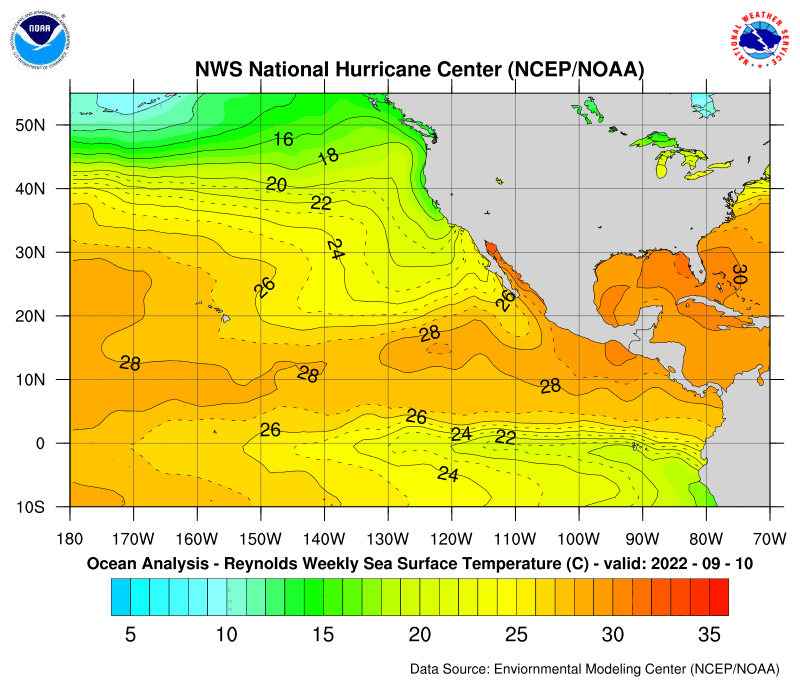
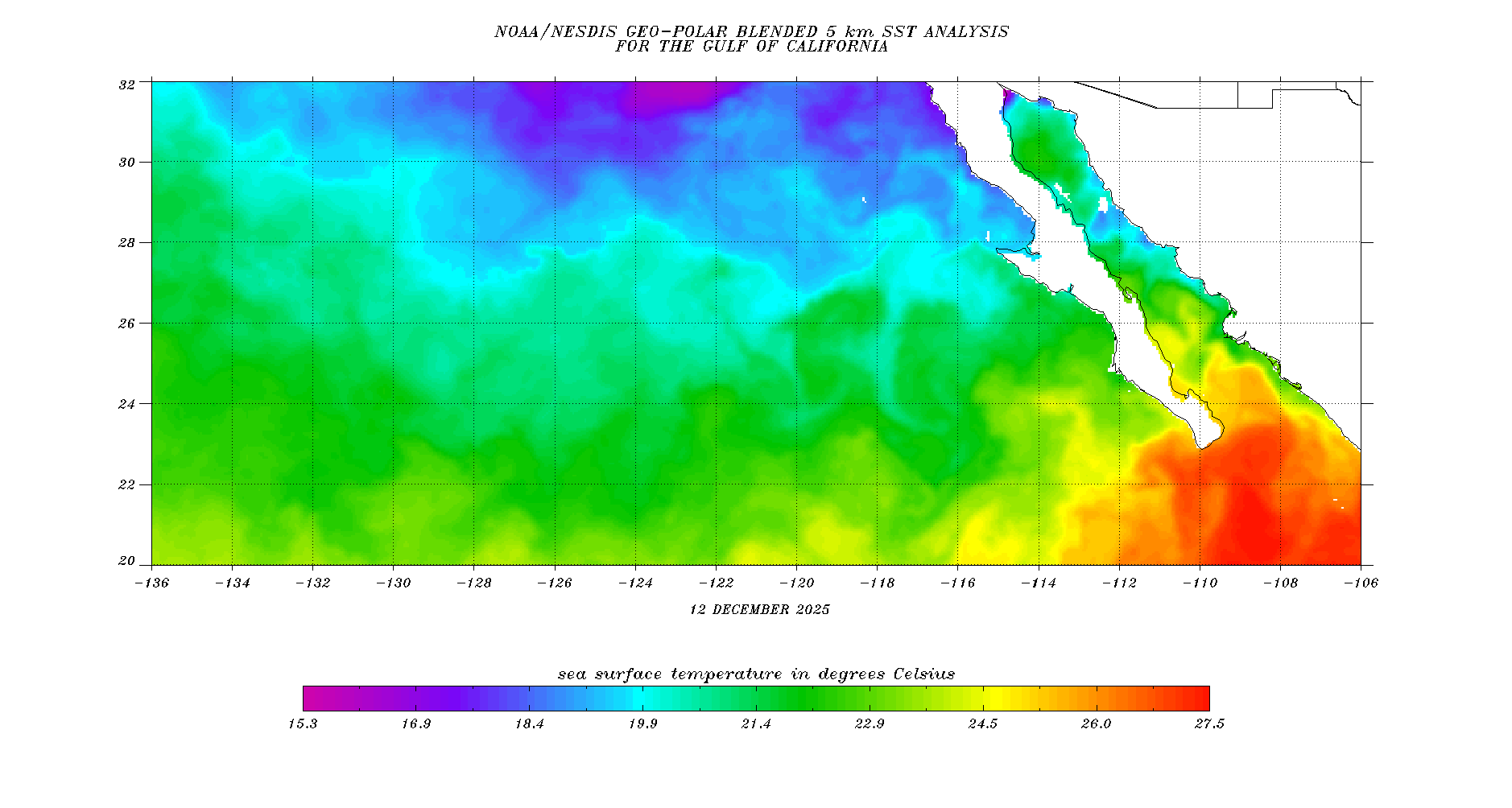
Along the northern beaches, a compressed marine layer will clear out rapidly by mid-morning as strong solar heating across inland valleys pulls afternoon sea breezes ashore. Water temperatures will continue to display a dramatic peninsular contrast: active upwelling keeps nearshore waters distinctly cool and brisk along the Northern Baja Pacific, while waters along the Central and Southern Baja Pacific, as well as throughout the entire Gulf of California, remain extraordinarily warm and bathwater-like.
Looking across the wider tropical Pacific, forecasters are monitoring a dynamic, multi-system setup. Far to the west-southwest, Category 1 Hurricane Odalys is tracking toward the east-northeast, but will soon encounter unfavorable upper-level winds, dry air, and cooler open waters that will cause it to steadily weaken over the coming days. Farther southeast off the mainland coast, Major Hurricane Polo churns as a high-end, compact Category 4 hurricane with peak core seas of 46 feet. Polo is completing an eyewall replacement cycle today and will track toward the west-northwest parallel to the Mexican coast through Friday.
Meanwhile, another broad area of low pressure developing south of the Gulf of Tehuantepec carries a high probability of tropical depression development over the next seven days as it moves west-northwestward. While Polo remains well offshore for now, powerful, long-period southerly swells will begin radiating northward toward peninsular waters by Thursday night. In contrast, the Gulf of California will see gentle, moisture-rich breezes providing generally mild surface conditions through tonight.
Regional Marine Reports
Northern Baja Pacific
Waters extending from the international border south past San Quintín to Punta Eugenia will see a shallow morning cloud deck burn off quickly toward the beaches before midday. Coastal winds will blow out of the northwest at 10 to 15 knots, maintaining cold coastal upwelling that will keep nearshore water temperatures feeling brisk to quite cool. Sea conditions will feature combined waves averaging 3 to 5 feet on a long 15-to-16-second swell interval, with wave energy steadily building into the weekend.
Southern Baja Pacific
From Punta Eugenia and Guerrero Negro south past San Juanico to Cabo San Lucas, skies will remain mostly sunny as dry air keeps coastal fog at bay. Offshore winds will blow out of the north to northwest at 10 to 15 knots before easing into gentle onshore breezes along the beaches during the afternoon. Water temperatures will stay exceptionally warm across this entire sector. Ocean waves will run 4 to 6 feet on a 14-to-15-second swell period, delivering consistent surf along exposed southern and western points.
Northern Gulf of California
Across the upper basin around San Felipe, Puertecitos, and Bahía San Luis Gonzaga, clear skies and baking desert heat will dominate the day. Surface winds will remain light, shifting out of the east to northeast at 5 to 10 knots through tonight. Water temperatures will remain superheated and bathwater-warm, generating muggy coastal conditions. Open waters will stay relatively smooth with light chop, carrying waves of 1 to 3 feet on a short 8-to-9-second period.
Southern Gulf of California
Covering the central and southern reaches from Santa Rosalía and Mulegé down past Loreto to La Paz, expect mostly sunny skies with scattered afternoon clouds forming over adjacent coastal peaks. Winds will blow gently from the southeast to south at 8 to 14 knots before falling light and variable near coastal anchorages. Water temperatures will remain deeply warm and tropical, fueling heavy humidity ashore. Sea conditions will remain calm to mildly choppy, running 2 to 4 feet on a mixed swell period, offering favorable cruising and boating conditions.
Los Cabos
Waters surrounding the Cape and the East Cape will experience partly cloudy skies with building afternoon cloudiness over inland summits, along with an isolated threat of afternoon showers or thunderstorms. Winds will blow out of the southeast at 10 to 16 knots, occasionally turning gusty and erratic near any localized showers. Ocean waters will remain hot and tropical. Nearshore wave heights will average 3 to 5 feet on a 14-second swell period, with southerly swells beginning a noticeable upward trend late Thursday.
Regional Offshore Wind & Wave Summary
Offshore Region | Wind Direction & Speed | Significant Wave Height | Dominant Wave Period |
kt | ft | seconds | |
US-Mex Border to 30N (Within 60 nm) | NW 10-15 | 3-5 | 16 |
30N to Punta Eugenia (Within 250 nm) | NW to N 10-15 | 3-5 | 15 |
Punta Eugenia to Cabo San Lazaro | NW to N 10-15 | 4-6 | 15 |
Cabo San Lazaro to Cabo San Lucas | NW to SE 10-15 | 4-6 | 14-16 |
Northern Gulf of California | ENE to NE 5-10 | 1-3 | 9 |
Central Gulf of California | SE to ESE 5-12 | 2-3 | 9 |
Southern Gulf of California | SE to S 8-14 | 2-4 | 14 |
Marine Warnings and Hazards
Offshore Wind and Sea Hazards
Moderate northwest breezes will keep open waters choppy but generally manageable along the Northern Baja Pacific and Central Baja Pacific today. Over the Gulf of California, light to moderate southeasterly winds will prevail, maintaining favorable cruising conditions across most inner channels.
Farther offshore to the south, the National Hurricane Center offshore forecast officially indicates possible hurricane conditions across southern offshore waters from Saturday through Sunday as Major Hurricane Polo approaches. Mariners and vessels planning passages across southern peninsular approaches should closely track subsequent marine advisories.
Swell and Surf Warnings
Energetic swells with long 14-to-16-second intervals will produce powerful breaking surf and hazardous rip currents across exposed west- and southwest-facing Pacific beaches. While nearshore waves will hold in the 4-to-6-foot range today, long-period swell energy generated by Major Hurricane Polo will begin pushing wave heights up to 8 to 12 feet across southern Pacific waters by Friday night.
Additionally, outer swells propagating from Hurricane Odalys will merge with Polo’s incoming swell train late this week, creating chaotic, confused sea states across southern marine approaches. Swimmers, surfers, and small craft operators navigating shallow tidal bars should exercise high vigilance.
Extended Outlook
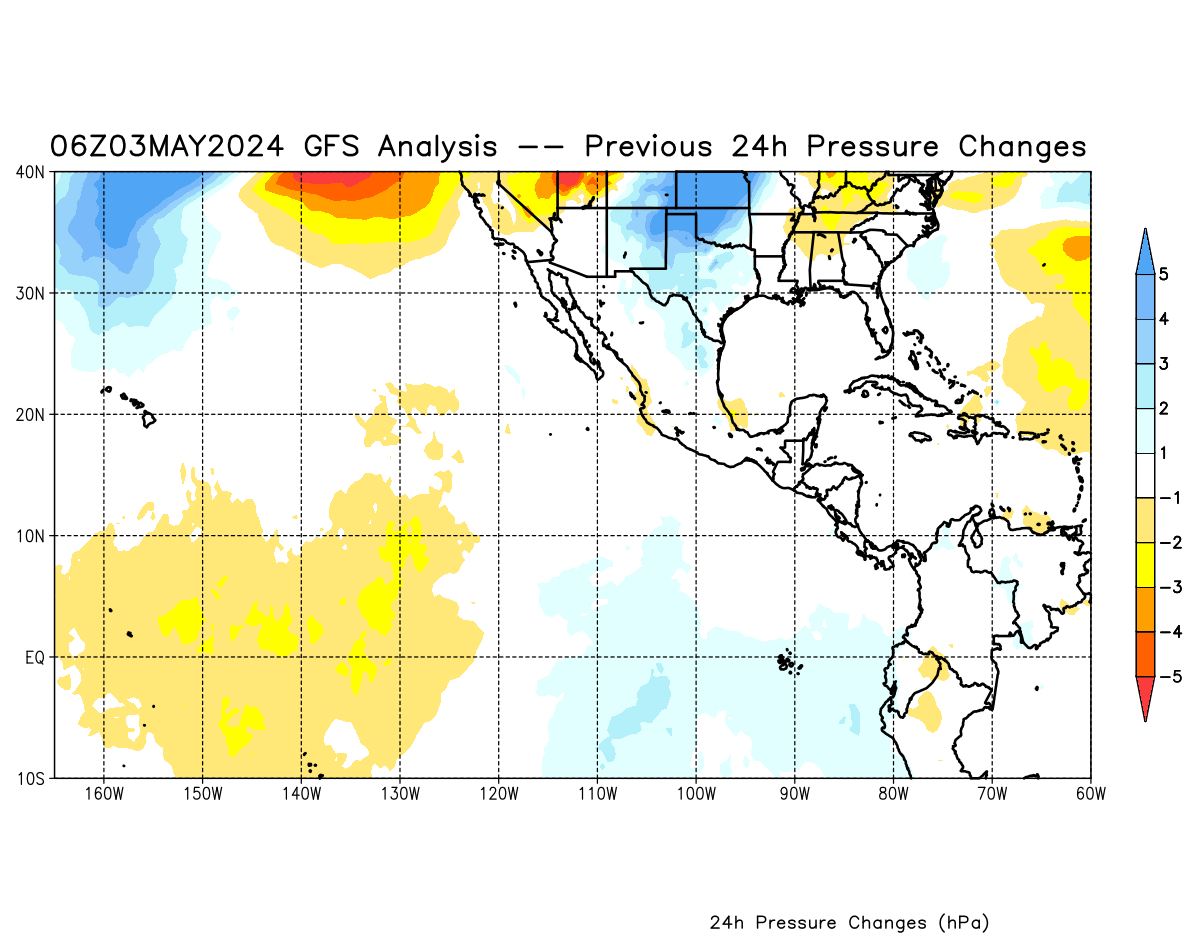
We expect the mid-level subtropical ridge over central Mexico to act as the primary steering barrier guiding tropical systems westward over the next couple of days. However, computer forecast models indicate an approaching West Coast trough will begin eroding the northern wall of this high-pressure ridge by late weekend.
This breakdown in steering currents could provide an atmospheric capture zone, pulling Major Hurricane Polo northward toward southern Baja California Sur between Saturday and Sunday. In addition, binary steering interactions with Hurricane Odalys to the west could further alter Polo’s path.
While coastal air will feel much warmer and increasingly muggy heading into Friday and Saturday, mariners across southern peninsular waters should prepare for rapidly deteriorating offshore conditions, building tropical seas, and increasing squall potential as the weekend approaches.
Seawater Surface Temperatures (SSTs)
| Location | Temp | Trend | Notes |
| Bahía Asunción, BCS | 84.4°F | Warming | Mid Baja Pacific active upwelling weakened under building southerly swell |
| Ba. Los Angeles, BC | 85.5°F | Cooling | Northern Gulf of California tidal channel mixing |
| Ba. San Ignacio, BCS | 85.8°F | Cooling | Mid Baja Pacific shallow lagoon outflow stabilization |
| Bahia Gonzaga, BC | 86.0°F | Cooling | Northern Gulf of California shallow basin wind mixing |
| Cabo San Lucas, BCS | 87.6°F | Cooling | Tropical surface water push at the peninsular tip |
| Cabo San Quintín, BC | 72.0°F | Cooling | Northern Baja Pacific persistent vertical mixing cell |
| Ensenada, BC | 72.7°F | Cooling | Stable coastal profile inside Bahía de Todos Santos |
| Erendira, BC | 69.4°F | Cooling | Northern Baja Pacific active localized upwelling |
| Guerrero Negro, BCS | 79.2°F | Cooling | Mid Baja Pacific high tidal exchange moderating lagoon waters |
| La Paz, BCS | 88.0°F | Cooling | Southern Gulf of California deep basin thermal mass stability |
| Loreto, BCS | 88.9°F | Steady | Central Gulf of California surface heat retention |
| Los Barriles, BCS | 88.6°F | Cooling | Southern Gulf of California minor localized breeze mixing |
| Mulege, BCS | 88.7°F | Cooling | Central Gulf of California minor localized breeze mixing |
| Playas de Tijuana, BC | 73.0°F | Steady | Northern Baja Pacific boundary current stability |
| Puertecitos, BC | 86.9°F | Steady | Northern Gulf of California shallow basin surface insulation |
| Punta Abreojos, BCS | 84.6°F | Cooling | Mid Baja Pacific localized cold upwelling anchor holding firm |
| Rosarito Beach, BC | 72.1°F | Cooling | Northern Baja Pacific marine layer cloud cover limiting solar gain |
| San Carlos, BCS | 86.2°F | Cooling | Southern Baja Pacific shelf water reacting to ambient air |
| San Felipe, BC | 88.2°F | Cooling | Northern Gulf of California shallow basin wind mixing |
| San Juanico, BCS | 85.8°F | Cooling | Southern Baja Pacific long period swell column mixing |
| Santa Rosalia, BCS | 86.4°F | Warming | Central Gulf of California surface heat retention |
| Santa Rosaliíta, BC | 75.0°F | Cooling | Central Baja Pacific northerly breeze baseline holding firm |
| Todos Santos, BCS | 87.4°F | Warming | Southern Baja Pacific swell bringing warm tropical surface water |


Tropical Storm Weather Forecast

CURRENT ACTIVE SYSTEMS



Offshore Waters Forecast (E Pacific Offshore of Mexico)
Windy 10 Day Forecast
GFS Model
ECMWF Model (European)
Atmospheric Pressure Changes
Sea Surface Temperatures (SST's)